
Reviews
Description
Core Puzzle Concept
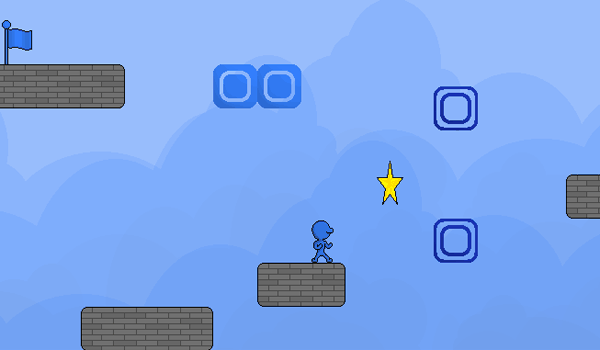
Shade Switch Platformer centers on a straightforward but clever idea: the player character can shift between several blue tones. Certain platforms and walls in each stage react only to one specific shade. This means that simply moving from left to right is not enough. Players must observe the environment, note which barriers match which color, and decide when to change the character's appearance. The mechanic encourages careful observation rather than fast reflexes.
Level Structure and Goals
Each stage in Shade Switch Platformer presents a self-contained puzzle. The primary objectives are always the same: collect every star scattered across the level and then touch the flag marker to finish. Stars are placed in locations that often require using the correct shade to reach them. Some may be behind a barrier that only opens to a particular color, while others sit on high platforms that demand a well-timed jump. The level layout gradually becomes more intricate, introducing new arrangements that test the player's planning skills.
Visual Style and Atmosphere
The game adopts a bright and cheerful art style. Backgrounds feature soft gradients and simple shapes, creating a calm environment. Character animations are smooth, and the color transitions happen instantly without any jarring effects. This visual approach makes the game suitable for players of all ages. There is no dark or intense imagery. The overall mood remains relaxed, which fits the puzzle-focused gameplay.
Accessibility and Control Design
Controls are kept minimal to reduce confusion. On-screen buttons handle left and right movement, a jump action, and the color shift command. The interface is clean and uncluttered, allowing players to focus on the puzzle at hand. There are no timers or score counters that might create pressure. This design choice means that anyone, regardless of gaming experience, can pick up the game and start solving puzzles immediately. The responsive controls ensure that mistakes come from poor planning, not from unresponsive input.
Progression and Difficulty Curve
Early levels introduce the basic mechanics with simple paths and few barriers. As players advance, stages begin to combine multiple color requirements and more complex platform layouts. The difficulty increases steadily, ensuring that each new puzzle feels like a natural step forward rather than a sudden leap. Players who take time to understand how shades interact with the environment will find later stages manageable. The game avoids frustrating spikes, making it a good choice for those who enjoy thoughtful problem solving.
Compatibility
Similar Releases
Kingdom Defense Tower Strategy

Castle Guardian: Fortress Builder
Community Guard: Tower Defense Fun

Precision Parking Logic Puzzle

Number Merge Puzzle: 2048 Challenge

Duck Merge Puzzle
Gem Match Puzzle Adventure

Trace Soccer Puzzle Strategy

Precision Agent Tactical Challenge

Player Comments
Sign in to comment
You must be logged in before posting a review or rating.
No account? Create one
No comments yet. Be the first to comment!